

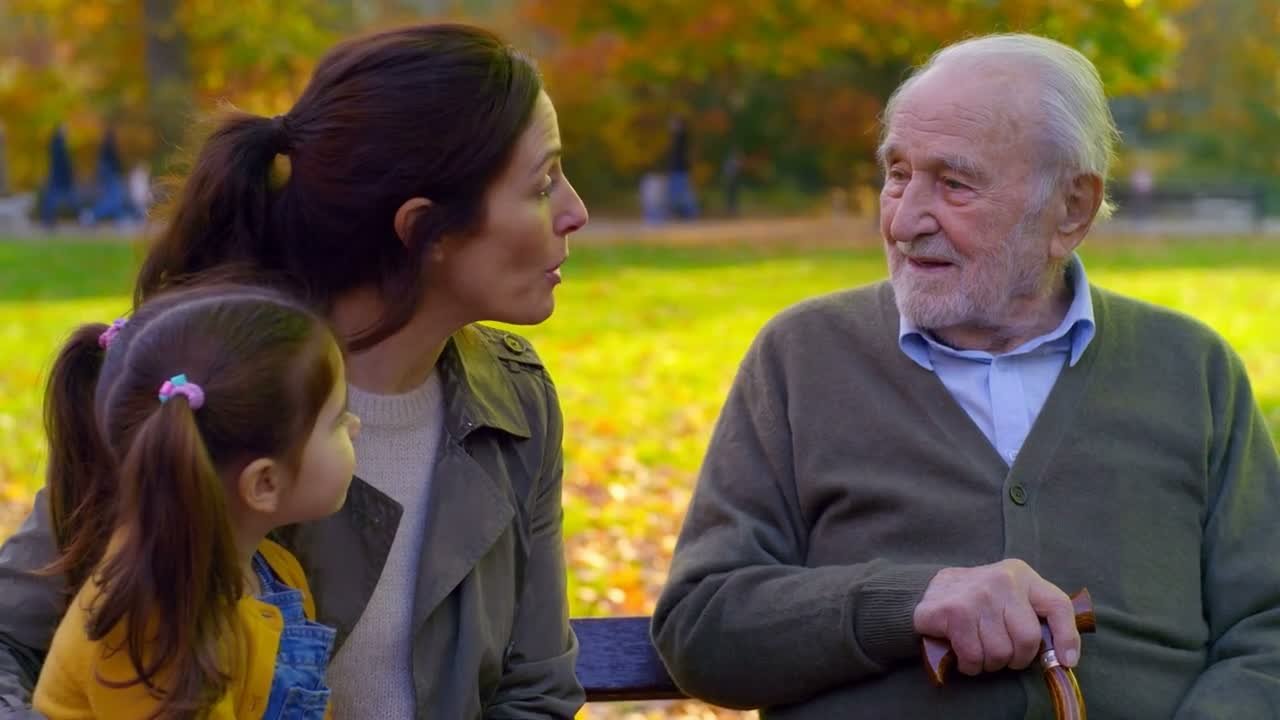
She was only seven years old. She was walking home from school, with her backpack on her shoulders and her lunchbox in her hand, like she had done so many times before. Nothing about that afternoon seemed special. The sun was soft and golden through the autumn trees, the park was quiet, and the walk home was familiar and safe.
And then she saw him.
An elderly man was sitting alone on a park bench, tired and hungry, with no one beside him and nowhere to go. Most people would have walked past. Most adults would have looked away, or hurried on, or told themselves that someone else would help. But this little girl did something different. She stopped.
She stopped several feet away, because she had been taught to be careful, and also because she did not want to frighten him. And then, in a small, polite voice, she asked the question that would change everything: Sir, have you eaten today?
The man looked up, surprised. He was not used to being spoken to, not used to being seen, and certainly not used to being asked about his day by a child. He smiled gently, the way people smile when they are trying not to worry someone else, and he said, Not yet, sweetheart, but don’t worry about me.
He was trying to protect her. He was trying to say, I am fine, go home, do not carry my problems with you. But she had already seen the truth in his tired eyes, and she could not unsee it.
She opened her lunchbox.
Inside was a sandwich, an apple, and a small cookie. It was not a feast. It was a child’s lunch, saved from school, simple and ordinary. But to a hungry man, it must have looked like the most generous meal in the world.
She looked at her food, and for a moment, she hesitated. That hesitation matters, because it shows that this was not an easy, thoughtless act. She was hungry too. She had been at school all day. She could have kept her lunch, walked home, and eaten it herself, and no one would have blamed her. No one would have even known.
But then she remembered what her mother always told her. And she walked closer.
My mom always tells me that we should share when someone needs help, she said.
It was not a speech. It was not a lesson she had memorised for a camera. It was simply what she believed, because someone at home had taught her that kindness is not something you talk about, it is something you do.
She held out the sandwich.
The elderly man gently accepted it, as if it were something precious, as if he were afraid that if he held it too tightly, it might disappear. His eyes became watery, not from dramatic, exaggerated tears, but from the quiet, overwhelming feeling of being remembered, of being treated like a person again after so long feeling invisible.
That’s very kind of you, he said softly. Are you sure you won’t be hungry?
It was such a selfless question. Even in his hunger, even after days of being overlooked, he was worried about her. He was worried that this little girl, who had just given him her lunch, might go hungry herself.
And she smiled, with the simple, honest confidence that only a child can have, and she said, I can eat when I get home.
In that moment, the roles reversed. The child became the giver, the adult became the receiver, and the sandwich became something far bigger than food. It became proof that someone cared. It became a reminder that kindness does not have to be big to be powerful. Sometimes, it is just a sandwich, offered by small hands, with a big heart behind it.
But the story does not end there. And that is what makes it even more beautiful.
Her mother approached from the sidewalk and saw the two of them talking. She could have been afraid. She could have pulled her daughter away, scolded her for talking to a stranger, or hurried her home. Instead, she did something extraordinary in its simplicity: she quietly listened.
She watched her daughter, she listened to the old man’s voice, and she understood what had just happened. Then she knelt beside her daughter and hugged her, not because her daughter had done something wrong, but because she had done something right, something so right that it deserved to be held close.
And then the mother looked at the old man, really looked at him, the way her daughter had, and she said, Would you like to come with us? We can get you a proper meal.
It was not charity from a distance. It was not a coin dropped into a cup and a quick walk away. It was an invitation. Come with us. Sit with us. Eat a proper meal, like a person, like a guest, like someone who matters.
Because he does matter. Because everyone matters, even the people we walk past every day without noticing.
The video ends with the little girl holding her mother’s hand as they walk together, while the elderly man follows them with a grateful smile. It is a simple ending, but it is full of hope. He is no longer sitting alone on a bench. He is walking with a family. He is no longer invisible. He has been seen.
And that is the real message of this story.
We live in a world that teaches us to hurry, to look at our phones, to mind our own business, and to walk past the people who need us most. We tell ourselves that we are too busy, too tired, too afraid, or that someone else will help. But a seven-year-old girl, with a lunchbox and a mother’s lesson in her heart, reminds us that it does not take much to change someone’s day.
It takes a question: Have you eaten today?
It takes a moment of courage: to stop, instead of walking past.
It takes a small act of sharing: a sandwich, when you could have kept it for yourself.
And it takes a mother who does not just teach kindness, but lives it, by kneeling down, hugging her daughter, and opening her arms to a stranger in need.
This little girl did not save the world. She saved a lunch, and then she gave it away. But in doing so, she saved something else, too: a man’s faith that people still care, that children still notice, and that kindness is still alive in a world that can feel so cold and so busy.
If a seven-year-old can see a hungry man on a bench and decide to share her lunch, then surely the rest of us can do the same, in our own small ways, every single day.
Look up. Slow down. Ask the question. Share what you have. And never, ever walk past someone as if they are not there.
Because sometimes, the smallest lunch, shared with the biggest heart, is enough to remind a person that they are not forgotten, that they are not alone, and that they are, and always have been, worthy of being seen.