

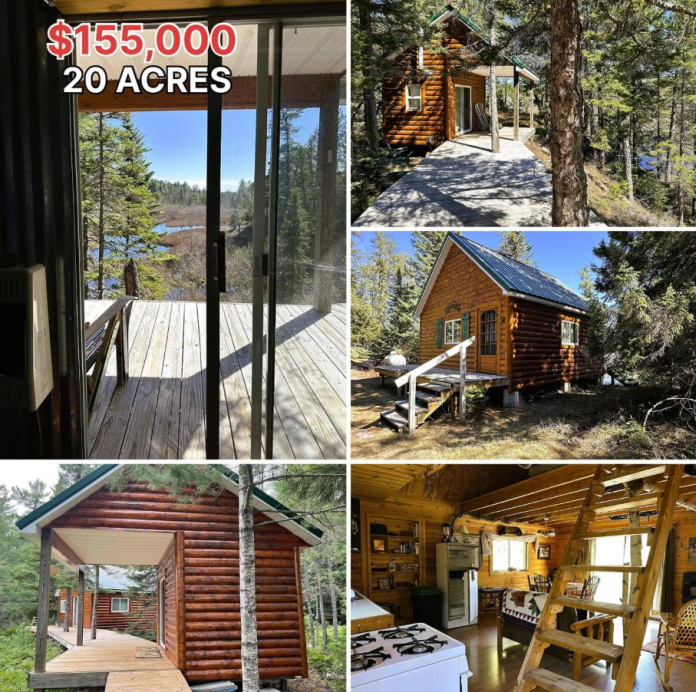
A secluded log cabin surrounded by approximately 20 acres of wooded land, with the Betsy River flowing through the property, is attracting attention in Michigan’s Upper Peninsula. Listed for $155,000, this rustic retreat in Paradise, Michigan, offers a combination of natural surroundings, recreational opportunities, and an off-grid lifestyle that may appeal to buyers looking for something far removed from conventional residential living.
Located at 38676 W Schroder Lane, Paradise, Michigan 49768, the property features an approximately 900-square-foot log cabin built in 1976. The listing describes one bedroom, one bathroom, a separate bathhouse, a drilled well, and a whole-house propane generator.
The acreage and river setting are major attractions. However, there is one important limitation that prospective buyers should understand before making plans: the property is reportedly accessible only by snowmobile during winter. That seasonal access restriction could make a significant difference for anyone considering extended stays or year-round use.
For someone who enjoys remote properties, outdoor recreation, and the independence of off-grid living, this Michigan cabin presents an interesting opportunity. But its access arrangements, utility systems, and overall condition deserve careful examination.
Property Overview: A Michigan Log Cabin on Approximately 20 Acres
The property combines a modest cabin with a substantial wooded parcel in a relatively remote part of Michigan’s Upper Peninsula.
According to the available listing information, the main details include:
| Property Feature | Listing Details |
|---|---|
| Asking Price | $155,000 |
| Location | 38676 W Schroder Ln, Paradise, MI 49768 |
| State | Michigan |
| Land Area | Approximately 20 acres |
| Cabin Size | Approximately 900 square feet |
| Year Built | 1976 |
| Bedrooms | 1 |
| Bathrooms | 1 listed |
| Construction | Log cabin |
| Stories | Approximately 1.5 |
| Foundation | Post-and-pier |
| Water Supply | Drilled well |
| Electricity | Whole-house propane generator |
| Heating | Propane |
| Cooling | None listed |
| Additional Structure | Separate bathhouse |
| Natural Feature | Betsy River |
| Reported Winter Access | Snowmobile only |
| Reported 2025 Property Taxes | Approximately $304 |
These details are based on the available property information and should be independently verified. Asking prices, availability, taxes, and property features can change.
Twenty Acres of Michigan Woodland Along the Betsy River
One of the strongest attractions of this property is the land itself.
Approximately 20 wooded acres provide a level of space and separation that is increasingly difficult to find in conventional residential neighborhoods. Instead of a small yard surrounded by nearby houses, the property offers a natural landscape where trees, wildlife, and the river help define the setting.
The Betsy River flows through the property, adding an important natural feature to the acreage. River frontage can make a recreational property especially appealing, creating opportunities to enjoy the water, observe wildlife, and spend time outdoors.
The listing also mentions established trails leading toward fishing areas. For outdoor enthusiasts, these trails may provide convenient ways to explore the surrounding landscape without having to travel far from the cabin.
Potential activities in this setting include hiking, fishing, wildlife photography, birdwatching, and simply enjoying the quiet atmosphere of the Upper Peninsula.
The property is also described as being in an area where deer, bears, and moose may be encountered. Wildlife sightings can be part of the appeal of a remote woodland retreat, although buyers should remember that living near wildlife also requires sensible food storage, awareness, and safety precautions.
As with any riverfront property, the actual condition of the shoreline and surrounding land should be investigated. Buyers should check for flood hazards, wetlands, erosion, drainage issues, and any restrictions that could affect improvements or recreational use.
A Rustic Log Cabin With Approximately 900 Square Feet
The main cabin offers approximately 900 square feet of living space and was reportedly built in 1976.
Its log construction gives it the traditional appearance many people associate with a Northwoods retreat. Rather than a large modern residence, this is a relatively compact structure designed around a simpler style of living.
The listing identifies one bedroom and one bathroom. That layout may be suitable for an individual, a couple, or someone looking for a modest seasonal getaway.
A 900-square-foot cabin can provide enough room for essential living areas while remaining easier to heat and maintain than a much larger home. However, the actual usefulness of the interior depends on its layout, storage, insulation, and the condition of the building.
Because the cabin dates back several decades, a professional inspection would be particularly important. Buyers should pay close attention to the condition of the logs, roof, windows, doors, foundation supports, flooring, and any areas where moisture may have entered the structure.
Log buildings require particular attention to maintenance. Water penetration, insects, wood deterioration, and damaged sealant can create problems if they are not addressed over time.
The cabin’s post-and-pier foundation should also be examined by a qualified inspector. The supports, connections, drainage, and stability of the structure are all important considerations.
The property may offer the atmosphere of a traditional rustic cabin, but its long-term value will depend heavily on how well the structure has been maintained.
Separate Bathhouse Adds Practical Space
Another feature identified in the listing is a separate bathhouse.
This additional structure is worth noting because it provides a dedicated space separate from the main cabin. Depending on its design and condition, it may offer additional convenience for someone using the property as a recreational retreat.
However, buyers should not assume that the bathhouse is fully equipped or that all plumbing and sanitation systems are currently operational.
Its water connections, drainage, fixtures, heating arrangements, ventilation, and overall condition should be checked during an inspection.
It is also important to establish whether the structure was built with any required permits and whether its current use complies with local regulations.
For a remote property, even a relatively small additional building can be useful. But its practical value depends on its actual functionality and the cost of maintaining it.
Off-Grid Living: Generator Power and Propane Heating
This property is not presented as a conventional home with ordinary utility connections.
The listing identifies a whole-house propane generator as the electrical arrangement and propane as the heating source. It also reports a drilled well for water.
For buyers who deliberately seek an off-grid lifestyle, these systems may be part of the attraction. They provide a different way of living, with more responsibility placed on the property owner.
However, off-grid infrastructure requires regular maintenance and careful planning.
Electricity and the Propane Generator
A whole-house generator can provide electricity when properly installed and maintained. It may support lighting, appliances, and other essential systems, depending on its capacity.
Before purchasing, buyers should request information about the generator’s age, operating hours, output capacity, maintenance history, fuel consumption, and condition.
It is also important to determine which electrical components are included in the sale and whether the system has been inspected by a qualified electrician.
Generator-based power is not automatically equivalent to a conventional utility connection. Fuel availability, operating costs, noise, maintenance, and backup arrangements all deserve consideration.
Drilled Well and Water Quality
The listing reports a drilled well, which is an important feature for a remote cabin.
Nevertheless, the existence of a well does not guarantee that the water supply is reliable or safe to drink.
A prospective buyer should arrange for a professional well inspection, water-flow test, and laboratory water-quality analysis. The inspection should also establish the condition of the pump, pressure system, pipes, and any water treatment equipment.
These checks are particularly important for a property that may be used for extended periods.
Propane Heating
Propane heating offers an alternative to conventional electric heating and can be useful in a rural setting.
However, the buyer should verify the heating equipment’s condition, age, service history, and fuel storage arrangements.
Michigan winters can be demanding, especially in the Upper Peninsula. Proper insulation, dependable heating, safe ventilation, and an emergency backup plan should be treated as essential rather than optional.
The Betsy River Adds Recreational Appeal
For many potential buyers, the river may be one of the most memorable features of the property.
Waterfront settings can offer a different experience from ordinary wooded acreage. The changing seasons, river sounds, surrounding trees, and opportunities to spend time near the water can make the location especially attractive.
The listing mentions fishing areas and established trails, suggesting that the property is intended to appeal to people who enjoy outdoor recreation.
Fishing, nature observation, and exploring the river environment may all be part of the experience, subject to applicable fishing regulations, access rights, and local restrictions.
Buyers should verify the precise boundaries of the river frontage and determine which shoreline activities are permitted. They should also investigate whether any easements, environmental protections, or floodplain restrictions affect the property.
The presence of a river is a valuable natural feature, but it also introduces responsibilities. Seasonal water levels, erosion, flooding, and changing ground conditions can affect the land over time.
A property-specific review is therefore important before assigning additional value to the waterfront location.
The Biggest Consideration: Winter Access Is Limited
The most important practical issue with this property may be its seasonal accessibility.
The available listing information states that the property is accessible only by snowmobile during winter.
This is a significant limitation and should be considered carefully before making a purchase decision.
For someone who enjoys snowmobiling and plans to use the cabin mainly as a seasonal recreational retreat, the arrangement may be acceptable. In fact, winter access by snowmobile could fit the lifestyle of a buyer who specifically wants a remote Northwoods experience.
For someone expecting to drive directly to the cabin throughout the year, however, this could be a major disadvantage.
Before purchasing, buyers should establish exactly what the access arrangement involves.
Important questions include:
- Is the access road privately owned or publicly maintained?
- Who is responsible for road maintenance?
- During which months can an ordinary vehicle reach the property?
- Is snowmobile access legally documented?
- Are there recorded easements or other access agreements?
- Can emergency services reach the property during winter?
- Where can vehicles be parked when snowmobile access is required?
- Are there any restrictions on using nearby trails?
It is especially important to distinguish between physical access and legal access. A route that can be used in practice is not necessarily a legally protected right of access.
Anyone considering this property should review the relevant title documents and access agreements with a qualified real-estate professional.
What Does the $155,000 Asking Price Represent?
At an advertised price of $155,000, the property combines approximately 20 acres of wooded land, an existing log cabin, river frontage, a drilled well, generator-based electricity, and a separate bathhouse.
A simple calculation places the asking price at approximately $7,750 per acre when divided by the reported 20 acres.
However, this figure should not be treated as the market value of the land alone. The asking price also includes the cabin, additional structure, utility systems, and riverfront setting.
A more meaningful comparison would involve recent sales of similar properties in Michigan’s Upper Peninsula, especially those with comparable acreage, cabin condition, river access, and seasonal road limitations.
The cabin’s age and the condition of its infrastructure could have a significant impact on the property’s actual value.
Buyers should also consider the potential cost of repairs, generator fuel, propane, well maintenance, insurance, road access, and ongoing property upkeep.
The asking price is only the beginning of the financial calculation. The total cost of owning and maintaining a remote property may be considerably different from the initial purchase price.
Property Taxes and Ongoing Ownership Expenses
The available property information reports approximately $304 in annual property taxes for 2025.
That figure should be confirmed through the relevant local tax authority. Buyers should request the latest tax bill and verify the property’s current assessment.
It is also important to understand that the cost of owning a remote cabin extends beyond annual taxes.
Potential expenses may include:
- Propane for heating and generator operation
- Generator servicing and repairs
- Well pump maintenance
- Water testing and treatment
- Roof and log-cabin maintenance
- Foundation and structural repairs
- Insurance for a remote recreational property
- Road or trail access arrangements
- Snowmobile transportation and equipment
- Tree removal and property maintenance
The distance from contractors, suppliers, and emergency services can also affect the cost and timing of repairs.
A realistic ownership budget should account for these expenses before a buyer decides whether the property is affordable.
Who Might Be Interested in This Michigan Retreat?
This property is unlikely to appeal to everyone, and that is precisely what makes it distinctive.
Its strongest potential audience consists of buyers who value land, privacy, outdoor recreation, and a more independent lifestyle.
A person looking for a seasonal hunting or fishing retreat may appreciate the wooded acreage and river setting. Someone who enjoys snowmobiling could also find the winter access arrangement compatible with their interests.
The cabin may appeal to a couple or an individual who prefers a smaller living space and does not require the conveniences of a conventional suburban home.
It could also interest someone who wants a place to disconnect from daily routines and spend more time outdoors.
However, the property may be less suitable for buyers who need reliable daily vehicle access, conventional utility connections, extensive indoor living space, or a low-maintenance residence.
The winter access limitation is particularly important for anyone planning to live there permanently or use the cabin as a frequent year-round home.
Important Questions to Answer Before Making an Offer
Before purchasing a remote property like this, buyers should complete a careful review of the land, cabin, utilities, and access arrangements.
1. Inspect the log cabin.
A qualified inspector should examine the logs, roof, foundation supports, windows, doors, floors, moisture conditions, and structural stability.
2. Verify the river frontage.
A survey and title review should establish the exact property boundaries, shoreline rights, easements, and any restrictions affecting use of the river.
3. Confirm legal access.
The winter snowmobile-only access statement should be investigated in detail. Buyers should understand the legal route, seasonal conditions, parking arrangements, and maintenance responsibilities.
4. Test the well.
The water supply should be evaluated for flow, quality, pump condition, and reliability.
5. Inspect the generator and heating system.
A qualified professional should confirm that the generator, propane equipment, electrical wiring, and heating system are safe and operational.
6. Review the bathhouse.
Its plumbing, sanitation arrangements, drainage, permits, and structural condition should be verified.
7. Check flood and wetland information.
Because the property includes river frontage, buyers should investigate mapped flood hazards, wetlands, erosion, and any applicable environmental regulations.
8. Confirm insurance availability.
Remote access, off-grid utilities, the age of the cabin, and river proximity may affect insurance options and costs. Buyers should obtain an insurance quote before closing.
Final Thoughts: A Remote Northwoods Cabin With Riverfront Appeal
Listed for $155,000, this Michigan property offers a combination that may be difficult to find in a conventional residential market: approximately 20 wooded acres, a rustic log cabin, reported Betsy River frontage, a drilled well, generator-based electricity, propane heating, and a separate bathhouse.
Its appeal comes from its natural setting and recreational potential rather than modern conveniences.
The property may be an attractive option for someone who wants a quiet retreat in Michigan’s Upper Peninsula and is comfortable managing the responsibilities of off-grid ownership.
At the same time, the reported snowmobile-only winter access is a major consideration. It could be an enjoyable part of the experience for one buyer and a serious obstacle for another.
The best approach is to evaluate the property as a complete package: the land, the cabin, the river, the utility systems, the legal access, and the long-term costs.
For the right buyer, this secluded Michigan retreat could offer an opportunity to enjoy a simpler lifestyle surrounded by woodland and water. But careful inspections and independent verification are essential before making a commitment.